
The GIA Fancy Color Grade Terms Explained
A clear breakdown of nine named color grade terms and how hue, tone, and saturation work together.
Exchange Member · Exporter, Importer & Manufacturer · 35+ Years
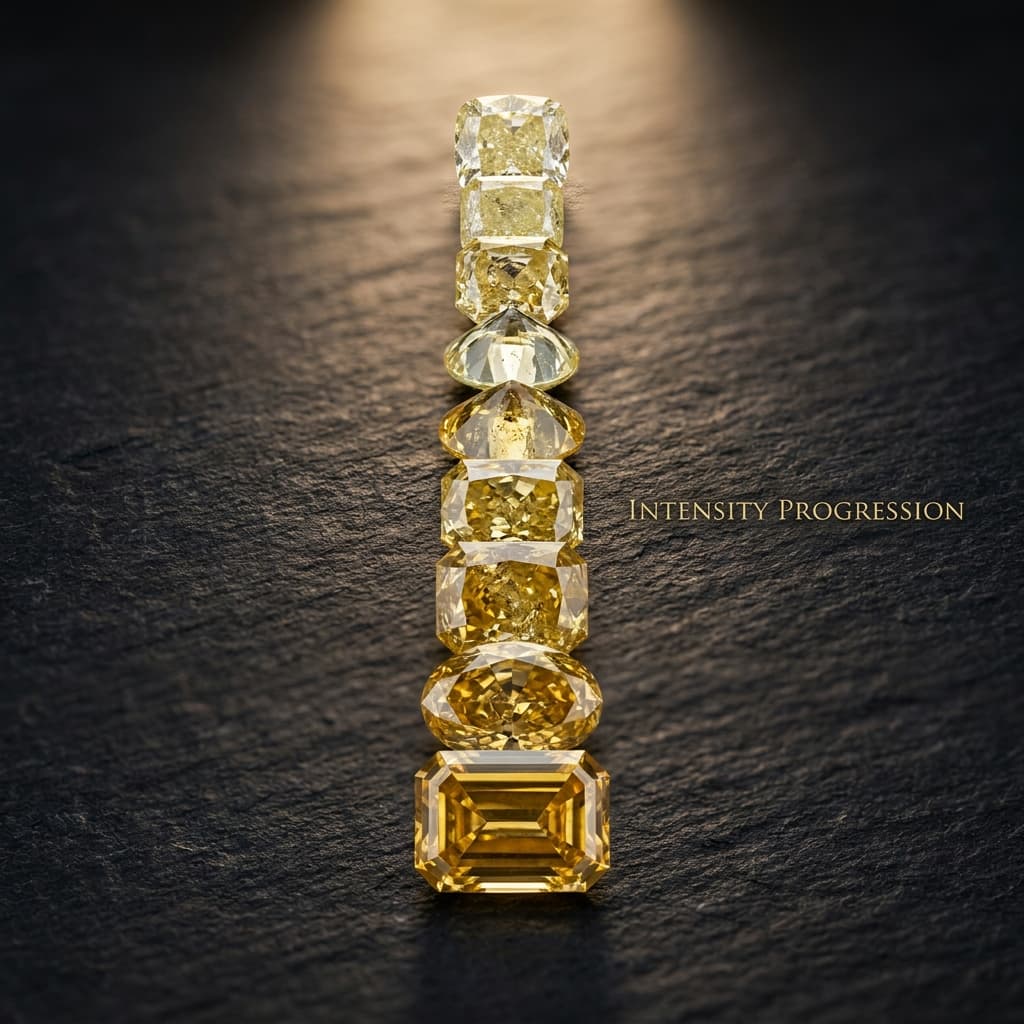
Diamonds in the normal color range are graded D through Z. Fancy color diamonds are described using hue, tone, and saturation and named grade terms. GIA's colored diamond grading research explains the system and its controlled visual comparison process.
The Nine Grade Terms
- Faint — color barely perceptible
- Very Light
- Light
- Fancy Light
- Fancy
- Fancy Intense
- Fancy Vivid
- Fancy Deep
- Fancy Dark
Color Grade and Value
GIA notes that even slight color differences can affect value, but it does not assign a universal multiplier between adjacent grades. Price also depends on hue, modifiers, tone, distribution, appearance, carat weight, clarity, cut, provenance, and the evidence available from comparable transactions.
How Hue, Tone, and Saturation Interact
Intensity terminology reflects the interaction of hue (the color family), tone (relative lightness or darkness), and saturation (color strength). Two stones can carry the same named grade term but look different face-up, so buyers should review consistent images, video, or the stone itself rather than relying on the grade alone.
Practical Takeaway for B2B Buyers
When comparing quotations, start with the full color grade and then compare face-up appearance, distribution, weight, clarity, cut, report scope, and current like-for-like evidence. See our color-specific guides for grading terminology and linked inventory.
Related Reports


Interested in these findings?
For inquiries about current quotations, sourcing requirements, or inventory and grading-report status, contact our Ramat Gan B2B headquarters.
Contact Headquarters