
High-Pressure High-Temperature (HPHT) Diamonds: Growth, Treatment & Disclosure
How HPHT technology is used to grow laboratory diamonds and alter the color of some existing diamonds.
Exchange Member · Exporter, Importer & Manufacturer · 35+ Years
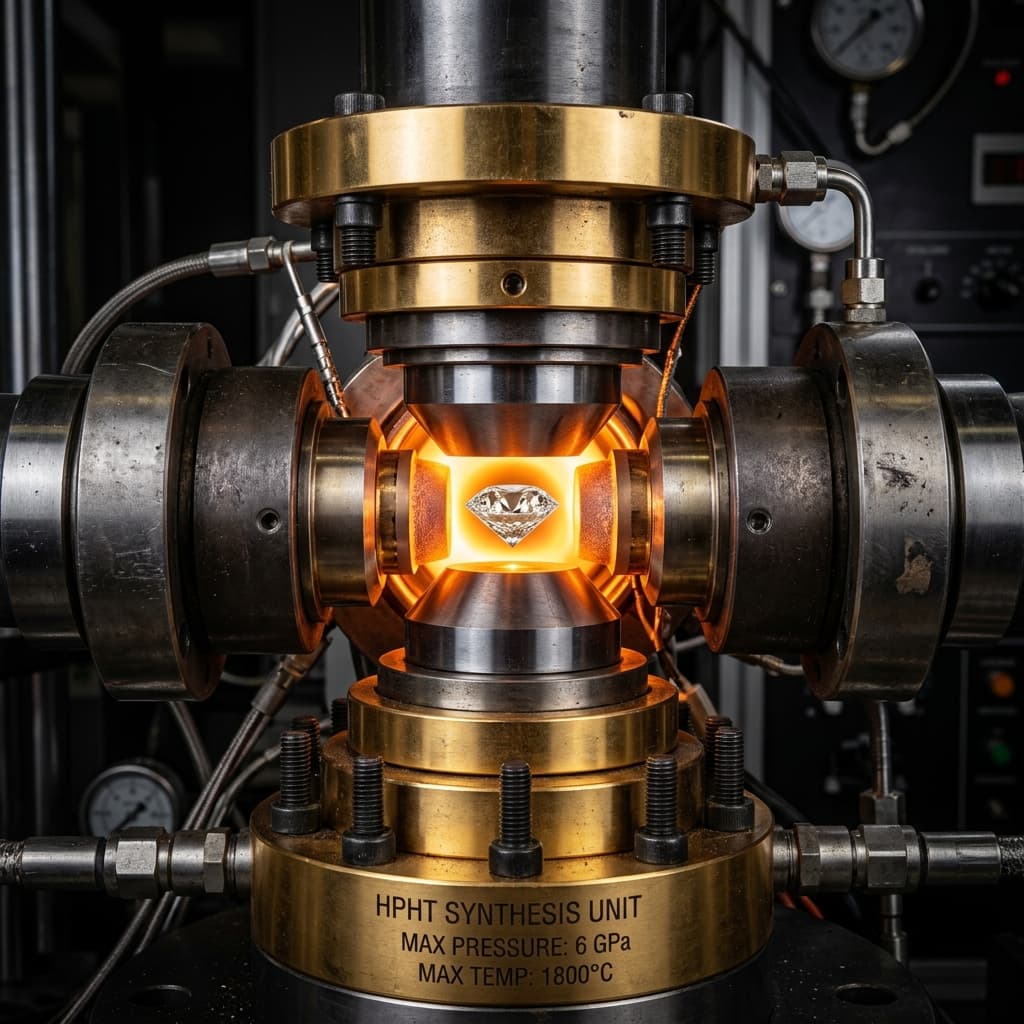
High-Pressure High-Temperature (HPHT) technology is used both to grow laboratory diamonds and to alter the color of some existing diamonds. These are different processes, even though both use high pressure and temperature. GIA's overview of HPHT and CVD growth explains the distinction and the identifying features created during growth.
1. HPHT Synthesis: Growing Diamond Crystals
During HPHT synthesis, a carbon source is placed with a diamond seed inside a press. GIA describes growth temperatures of approximately 1300°C to 1600°C and pressure above 870,000 pounds per square inch. A molten metal flux may contain iron, nickel, or cobalt and helps carbon crystallize on the seed.
2. HPHT Treatment: Color Alteration
HPHT treatment can reduce brown or gray coloration in suitable natural diamonds and can also create or modify color by rearranging atomic defects. The result depends on diamond type and starting material; it is not a universal transformation. GIA's study of natural-color D-to-Z diamonds notes that only a small subset of diamond types can be decolorized this way and recommends laboratory confirmation of color origin.
Implications for B2B Dealers
A grading report should be read for both growth origin and any detected treatment; visual appearance alone is insufficient. Price effects cannot be reduced to a universal discount because stones and transactions differ. Most stones in our B2B inventory carry GIA grading reports, while each listing states its laboratory and report status, including when no report is available.
Related Reports

Interested in these findings?
For inquiries about current quotations, sourcing requirements, or inventory and grading-report status, contact our Ramat Gan B2B headquarters.
Contact Headquarters