
CVD Diamond Growth: The Physics of Chemical Vapor Deposition
Understanding gas-phase synthesis, plasma reactors, and lattice deformation.
Exchange Member · Exporter, Importer & Manufacturer · 35+ Years
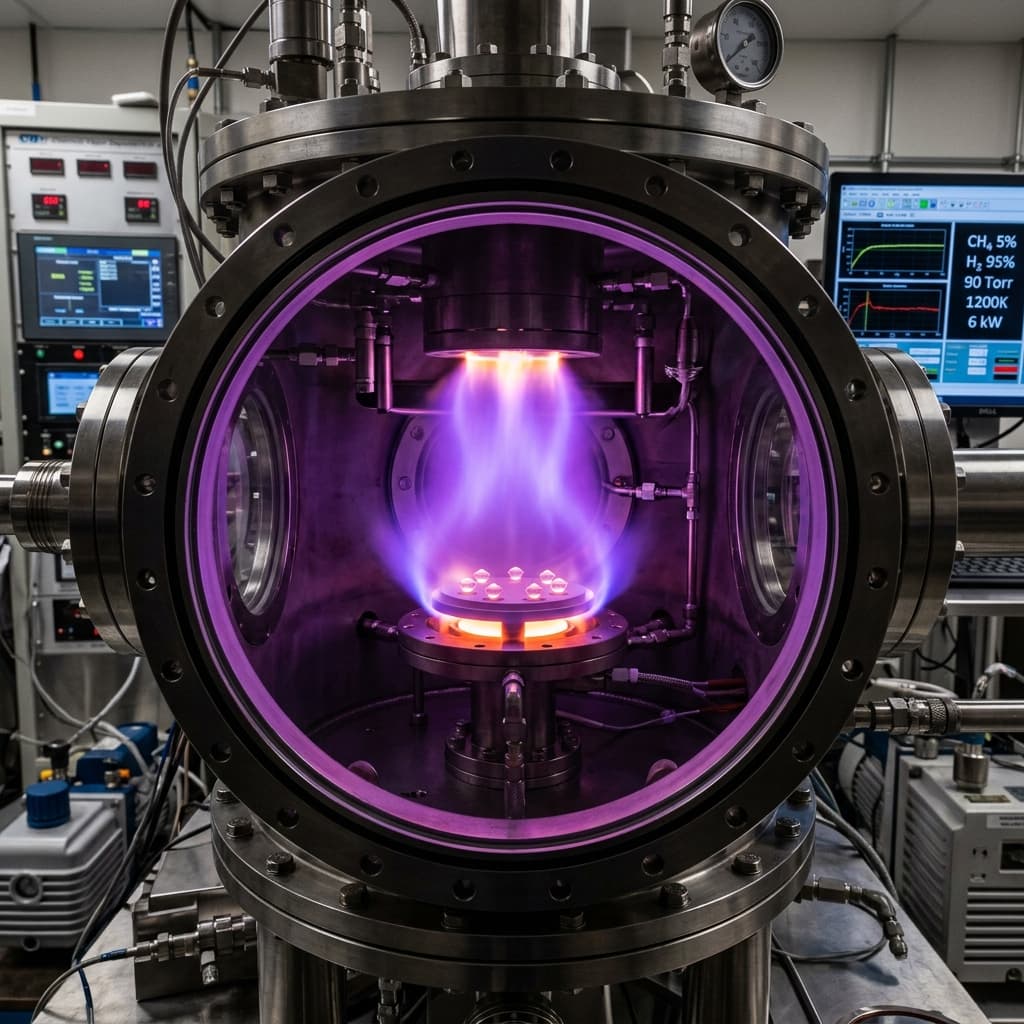
Unlike HPHT growth, chemical vapor deposition (CVD) grows diamond at lower pressures in a chamber containing hydrogen and a carbon-bearing gas such as methane. GIA's process overview describes how carbon deposits on flat diamond seed plates over a period of weeks.
The CVD Synthesis Process
The CVD process is carried out in several key stages:
- Substrate Placement: Small, ultra-flat diamond seed crystals (often produced via HPHT) are laid out on a substrate holder.
- Gas Introduction: Methane (CH4) and Hydrogen (H2) gases are introduced into the chamber, which is depressurized to a fraction of atmospheric pressure.
- Plasma Activation: Microwave energy breaks down the gas molecules and creates the reactive species needed for diamond growth.
- Carbon Deposition: Carbon from the activated gas deposits on the seed and builds diamond layer by layer. GIA describes chamber temperatures of about 900°C to 1200°C for this process.
Post-Growth Color Tints
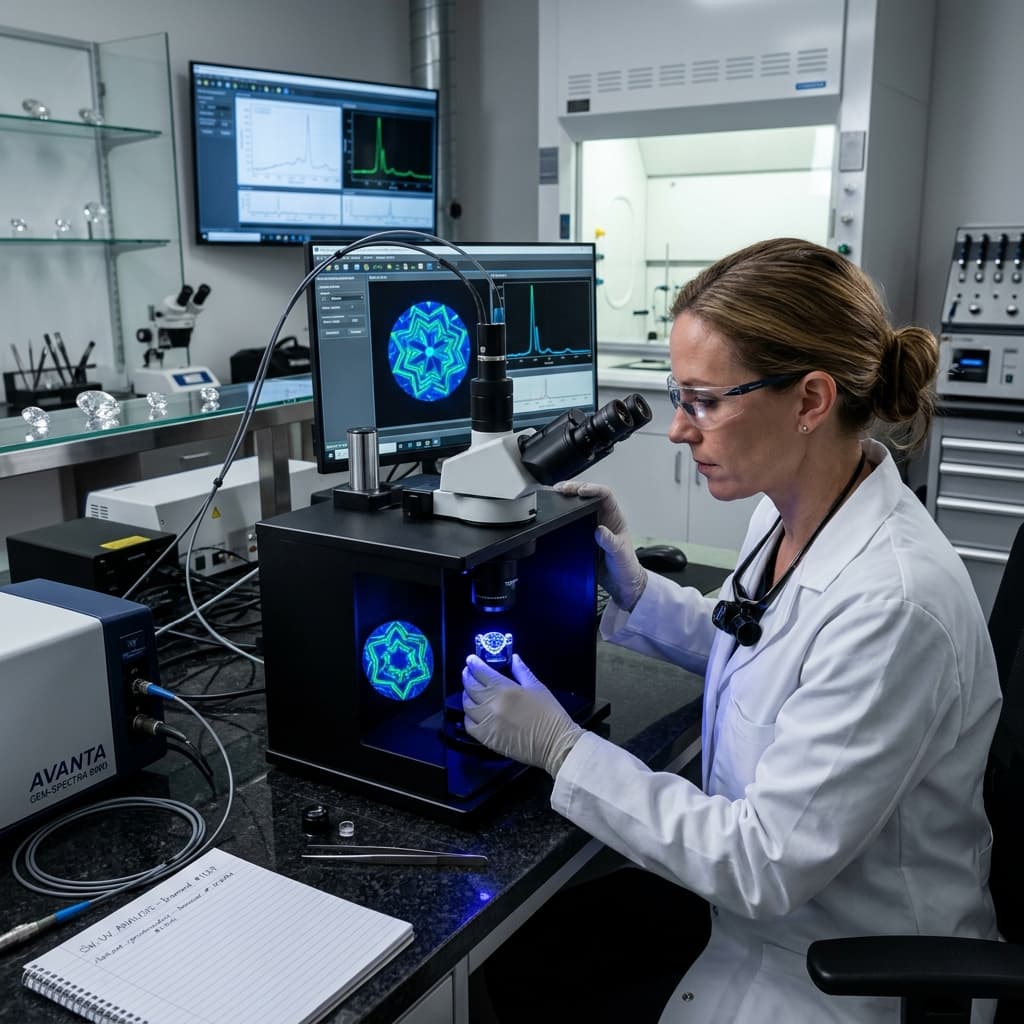
Some CVD-grown diamonds develop brown coloration associated with defects and may undergo post-growth annealing to modify that color. GIA's 2024 laboratory update explains that post-growth processing is common among CVD submissions and that laboratories use spectroscopy and imaging to identify growth and treatment features. S.RONEN DIAMOND LTD trades exclusively in natural stones; see our color guides for natural fancy color formation.
Related Reports

Interested in these findings?
For inquiries about current quotations, sourcing requirements, or inventory and grading-report status, contact our Ramat Gan B2B headquarters.
Contact Headquarters