
Diamond Overtones and Modifiers Explained: What 'Grayish-Blue' or 'Brownish-Yellow' Really Means
Understanding how GIA describes secondary hues in fancy color diamonds and why the complete color grade matters when comparing stones.
Exchange Member · Exporter, Importer & Manufacturer · 35+ Years
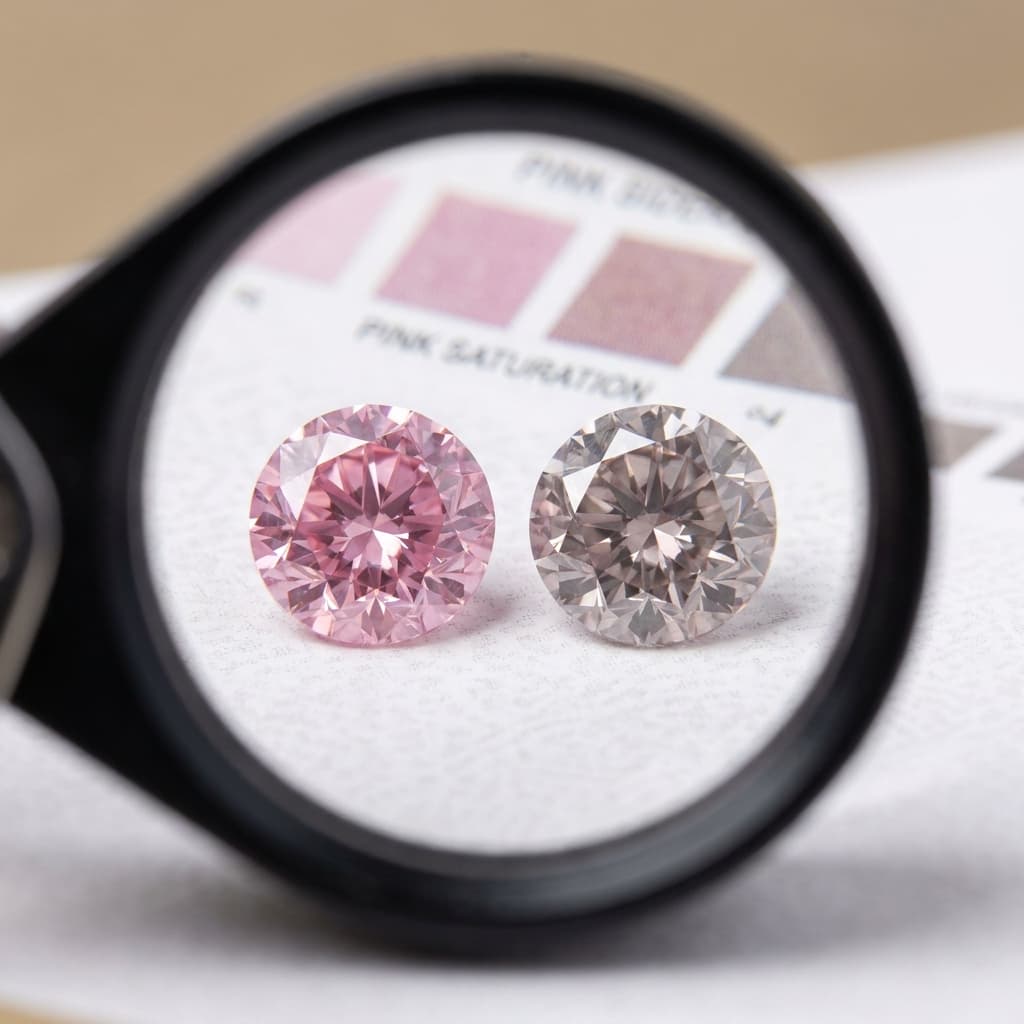
A fancy color diamond may receive a single-hue or multi-word color description. In GIA's colored diamond grading terminology, modifying colors precede the predominant color, which is stated last. For example, "Fancy Intense Grayish Blue" identifies blue as the predominant hue, while "Fancy Vivid Purplish Pink" identifies pink as the predominant hue. Reading the complete description is essential when comparing stones.
How GIA Records Secondary Hues
GIA lists the primary hue last and any modifiers before it. "Grayish Blue" means gray is the modifier and blue is the primary hue. When two modifiers are present, such as "Brownish Greenish Yellow," the modifier closest to the primary hue has the larger visual influence.
When a Modifier Adds Value
Market preferences vary by hue, intensity, size, appearance, and buyer. A modifier may affect a stone's desirability, but the GIA color description is a grading result, not a formula for calculating a fixed premium.
When a Modifier Reduces Value
Gray or brown modifiers should not be treated as automatic percentage discounts. Stones should be compared using the complete color grade, face-up appearance, color distribution, carat weight, clarity, and current evidence from comparable transactions.
Reading a Certificate Like a Trader
Before comparing price quotes, read the full color description on the grading report, not just the final color word. GIA notes that even slight color differences can affect value, but its grading system does not assign universal percentage premiums or discounts. Review the GIA fancy color diamond quality factors, compare current like-for-like market evidence, and use our color guides to understand the terminology applied across the inventory.
Related Reports



Interested in these findings?
For inquiries about current quotations, sourcing requirements, or inventory and grading-report status, contact our Ramat Gan B2B headquarters.
Contact Headquarters